
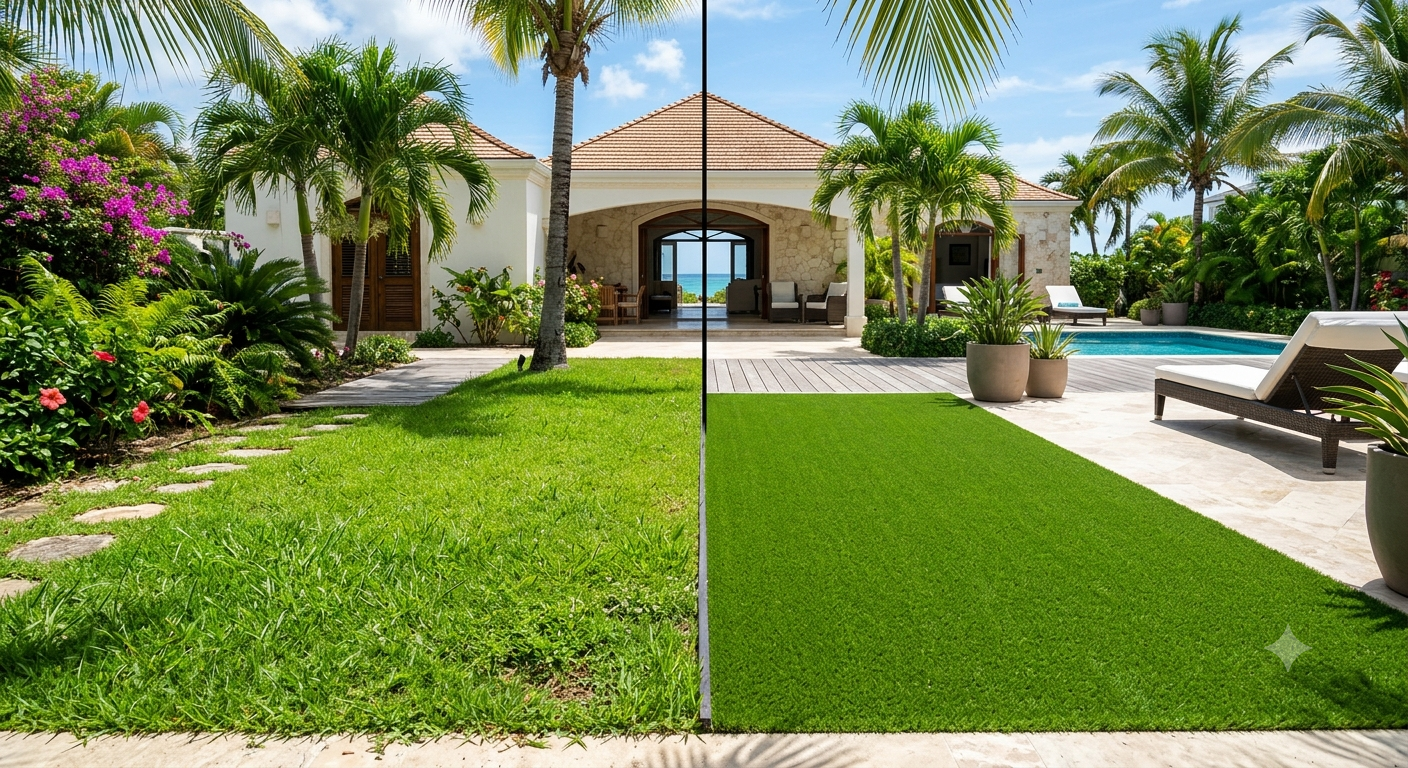
Artificial turf comes up more often than it used to, usually from clients tired of lawn maintenance or dealing with a spot where natural grass consistently struggles. It's a reasonable option in specific situations and a poor one in others.
Where artificial turf genuinely makes sense
Heavily shaded areas where natural grass has failed repeatedly, small awkward patches not worth irrigating separately, and low-use decorative zones are all reasonable candidates. It also suits properties with very limited water access, since it removes lawn irrigation from the equation entirely.
Where it doesn't work as well as people expect
Goa's heat is the biggest practical issue — artificial turf gets noticeably hotter underfoot than natural grass in direct sun, which matters for anywhere kids, pets, or bare feet are involved. Drainage also needs careful attention: poorly installed turf in a monsoon climate can trap water underneath and develop odour or mould issues that a natural lawn simply wouldn't have. It requires a properly engineered sub-base with drainage, not just turf rolled onto existing soil.
The maintenance trade isn't zero
Artificial turf is often sold as maintenance-free, which isn't quite true here — it still needs periodic rinsing to clear dust and debris, brushing to keep fibres upright, and occasional deep cleaning to prevent odour buildup in the humidity. It's lower maintenance than a natural lawn, not maintenance-free.
What natural lawn still does better
Natural grass cools the surrounding area, supports soil health and drainage naturally, and simply feels different underfoot — for most residential gardens where the lawn gets regular use, natural turf remains the better choice, especially with the right grass variety for the specific site conditions.
Our honest recommendation
We install artificial turf when a client has a specific, well-suited use case for it — not as a default alternative to fixing an underlying lawn problem that a natural lawn with proper irrigation and drainage would actually solve better and probably cheaper over time. If you're considering artificial turf, talk to us first about why your natural lawn option isn't working — sometimes the fix is simpler than switching materials entirely.