
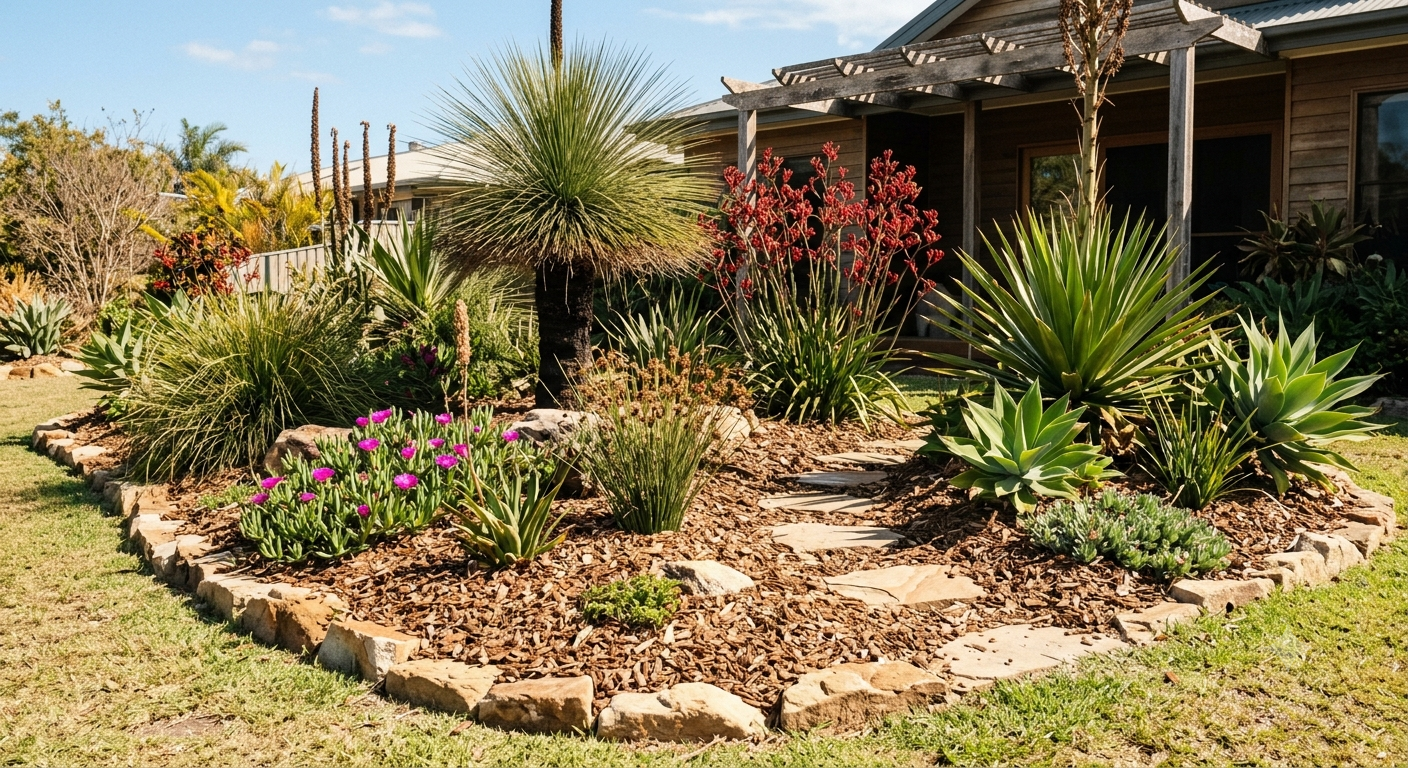
Xeriscaping — garden design built around minimising water use — gets associated with arid climates, and clients sometimes assume it's irrelevant in a place that gets as much rain as Goa does. That's only partly true, and the nuance is worth understanding before dismissing it.
Why it's not as irrelevant as it sounds
Goa's rainfall is extremely concentrated: a huge volume falls in a few monsoon months, and the rest of the year is comparatively dry, with borewell and municipal water both under real seasonal pressure. A garden designed to need less supplemental water during the dry months has genuine practical value here, even though the climate isn't arid in the way xeriscaping's origins assume.
What xeriscaping principles actually transfer
Grouping plants by water need so irrigation isn't wasted on drought-tolerant species planted next to thirsty ones, choosing drought-hardy structural planting for larger areas, and using mulch heavily to retain moisture all apply directly in Goa, regardless of total annual rainfall. These are just good water-efficient design practices independent of climate type.
Where the arid-climate playbook doesn't fit
Gravel-and-succulent xeriscaping, the style most associated with the term, doesn't suit Goa's aesthetic or its heavy monsoon — succulents and cacti generally struggle here during the rains, and an all-gravel landscape looks out of place against Goa's naturally lush surroundings. We adapt the water-efficiency principle without importing the desert-garden look wholesale.
A more accurate framing for here
"Low-water" fits better than "xeriscape" for what actually works in Goa: drought-tolerant native and naturalised planting as the structural backbone, reduced lawn area in favour of groundcover and hardscaping where lawn isn't essential, and efficient drip irrigation zoned by actual plant water need rather than blanket watering.
Who this makes the most sense for
Low-water design is worth prioritising for holiday homes and properties without daily on-site management, larger plots where full irrigation coverage would be costly, and anyone specifically trying to reduce borewell dependency during the dry season. For a daily-occupied villa garden with normal water access, it's a nice-to-have rather than a necessity.
If reducing your garden's water dependency is a priority, get in touch — we can build genuinely low-water principles into a design that still looks like it belongs in Goa, not a transplanted desert garden.